Across India and overseas, workers face mounting risks from unsafe workplaces and extreme heat to legal uncertainty, detention and changing migration policies.
Nearly 23,000 Indian workers have died in Saudi Arabia and the UAE between 2021 and 2025, according to the Ministry of External Affairs’ data presented in the Parliament during the recent monsoon session.
While 11,923 Indian workers died in Saudi Arabia, 11,489 in the UAE between 2021 and 2025, the data showed.
According to a Times of India report, the two countries together accounted for more than 71% of recorded Indian worker deaths across the six Gulf Cooperation Council or GCC countries during the five-year period. Kuwait recorded 3,890 deaths, Oman 2,457, Qatar 1,548 and Bahrain 1,206.
In another response, the MEA said that over 1900 deaths by suicides among Indians were reported in foreign countries. Of these, 1340 took place in Gulf countries with more than 500 cases reported from the UAE alone.
Over the last three years, GCC countries recorded more than 70% of the suicide cases, followed by Malaysia (131) and the United States (62). Italy, Canada and the United Kingdom recorded over 30 cases each in the three-year period, according to a report by The Indian Express.
The figures were provided by Minister of State, External Affairs, Kirti Vardhan Singh, in Lok Sabha during the ongoing Parliament session. He was responding to a question by Congress Parliamentarians Satpal Brahamchari and Jai Prakash on ‘review of death of Indian citizens abroad’.
On an average, number of suicide cases by Indian citizens living abroad seems to have increased in the period cited when compared to the last such figure provided by the government. In 2022, the MEA had pegged the number of suicides between 2014 and 2022 at 4,005, another report by WION News, on the same data stated.
Extreme heat X workers’ incomes
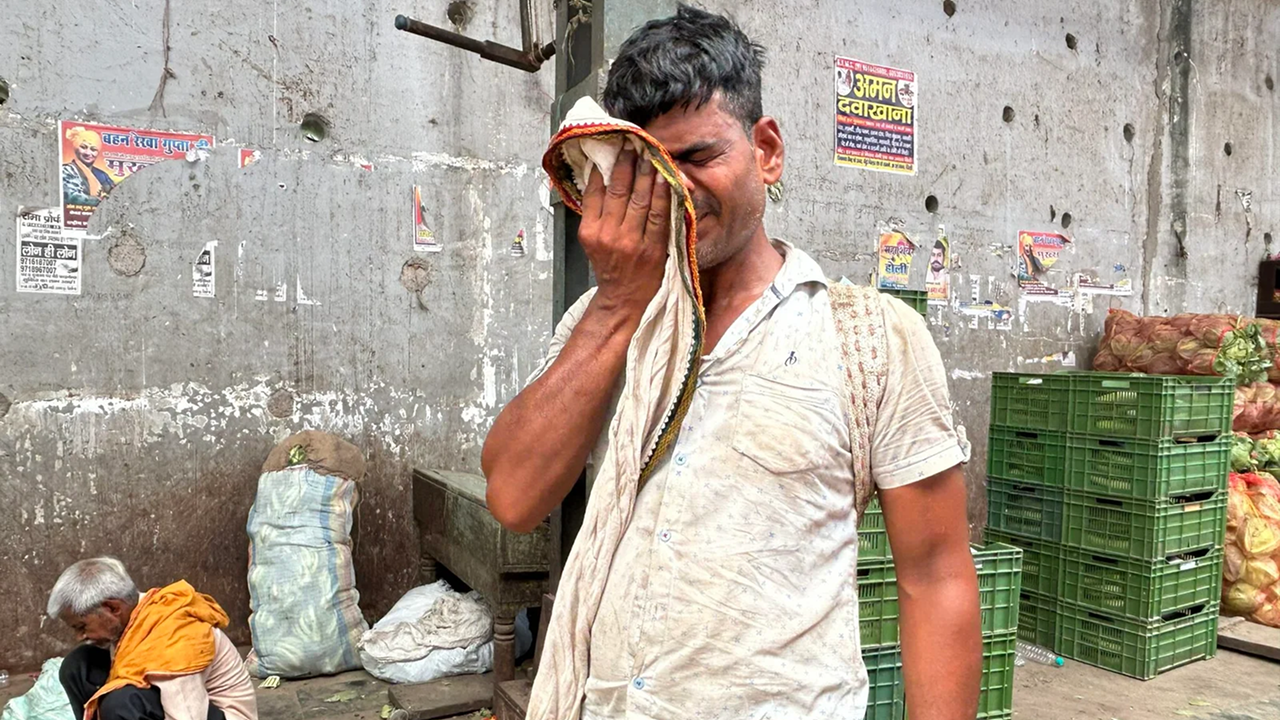
A study by the International Institute for Environment and Development (IIED), based on a survey of 538 informal-worker households in Delhi, Agra and Ajmer, examined the economic and health effects of extreme heat.
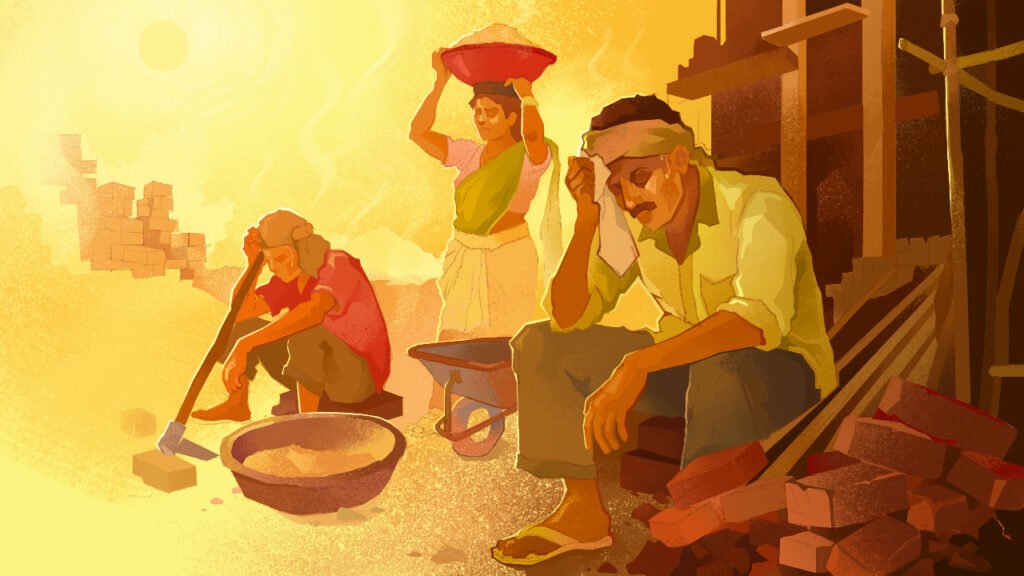
It found that heat exposure was reducing productivity and working time and contributing to health problems. The report estimates that heat-related productivity losses and chronic kidney disease could result in national economic losses equivalent to nearly 2% of India’s GDP.
A report by Climate Home News, based on the research, estimated the annual loss in wages for India’s informal workers at around USD 78 billion. The study found that outdoor workers in the three cities lost more working days than indoor workers, while many workers also returned to homes that offered little relief from heat.
Ritu Bhardwaj, Director, IIED was attributed as saying, that social protection from the government to pay people for days they are unable to work due to heat, as well as micro-insurance schemes with payouts triggered by temperature measurements, should be stepped up.
This money would help families buy food and pay medical bills when their income dips if they fall ill or cannot work their usual hours due to soaring temperatures, the report further stated.
The Guardian quoted her as saying, “Heat is quietly pushing these families deeper into poverty. As the heat rises, their efficiency goes down, so they earn less. With lower income their food intake falls. And because they cannot afford to stop, they keep working through it, doing lasting damage to their health. They are paying for a crisis they did nothing to cause, with their health and with their savings.”
Seven workers were killed and several others injured after water and debris entered an under-construction tunnel at the 444-MW Vishnugad-Pipalkoti hydropower project in Chamoli district, Uttarakhand, on August 13.
Al Jazeera, citing AFP and AP, reported that 22 workers were inside the tunnel when the incident occurred and that three remained missing during the rescue operation.
According to a ground report by Down To Earth, the workers engaged in the tunnel project were all migrant workers from Chhattisgarh, Jharkhand, Punjab, Himachal Pradesh, Bihar, West Bengal, and Uttar Pradesh.
The report also cites an Environmental Impact Assessment report that acknowledges that the rock formations here are geologically challenging. Several sections of the tunnel route characterised by weak rock, as well as areas prone to fissures and rock slippage, have been identified. The study also highlights groundwater seepage in these locations as a challenge for tunnel construction.
The Down To Earth report also cited social activist Atul Sati, who has raised concerns around such projects. He said, “Despite repeated accidents, we fail to learn any lessons. Several such tunnel accidents have occurred in the state in the past as well.”
But this isn’t the first such incident. In July, 20 people working in an under construction tunnel in Sikkim were killed due to a methane gas explosion. In 2023, 41 workers were rescued after being trapped for 17 days inside a tunnel that collapsed in Uttrakhand.
H-1B VISA impact on Indians
The US Department of Homeland Security (DHS) is extending an existing USD 4,000 fee on H-1B petitions to certain visa extensions from September 9. Multiple news websites reported on how this change could impact companies that rely heavily on foreign skilled workers, especially Indian workers.
India has long been the largest source of H-1B professionals, particularly in technology and engineering, an India Today explainer stated. The visa has become an important route for Indian software engineers, IT professionals and other highly skilled workers to take up jobs in the US, it noted.
According to official data, as quoted by FirstPost, 70 percent of H-1B workers in 2025 were Indians, followed by 12 per cent from China. In 2024, the picture remained more or less the same; of 399,402 H-1B petitions approved, Indian-born applicants made up 71 per cent.
The India Today explainer also stated that the immediate question is not whether an Indian worker can afford the hike, but whether a US company will be willing to spend that much to hire one.
“A six-figure government charge could change the economics of hiring. Companies may become more selective about sponsoring foreign workers, particularly for entry-level or lower-paid positions where the additional cost is harder to justify,” the explainer read.
The April protests in Noida were followed by a police crackdown in which workers were booked under serious charges, including rioting, arson and attempted murder. An Indian Express investigation into 106 arrests found that protesters with substantive allegations spent an average of 53 days in custody. The arrests resulted in 222 bail orders across seven FIRs, but courts granted relief in 188 cases — 84 per cent of the bail pleas examined.
The analysis of the bail orders by the Indian Express reporters, revealed that there was a recurring concern with the way the cases were framed. Judges repeatedly noted that the police allegations appeared to treat the crowd itself as the accused, without clearly establishing what individual workers had done.
In several cases, courts stressed that mere presence at a protest was not enough to deny bail and that specific evidence was needed to link a person to the alleged offences. The courts cautioned against equating protesters with alleged instigators in the absence of individual evidence.
Bengali Migrant workers detained in Bengaluru
Reports emerged of Bengali Muslim migrant workers being targetted and detained in Bengaluru.
According to a report by The Newsminute, “On August 8, 2026, police teams broke into the sheds of Bengali Muslim migrant workers around 6:30 am at various locations across Bengaluru, and detained over 900 people, including children and elderly. All of them are employed in manually collecting or segregating garbage – a job nobody else in the city is willing to do. Apparently, this action against the people who provide this lifeline service to the city, was taken to ‘identify illegal Bangladeshis’. “
The report stated that the police carried no warrants or official orders. Maktoob India also reported that political leaders and civil liberties and workers’ organisations had raised concerns over the detentions. They reported that former Lok Sabha MP Adhir Ranjan Chowdhury wrote to Karnataka Chief Minister D.K. Shivakumar alleging that Bengali-speaking Indian citizens, particularly workers from Murshidabad, were being profiled and detained during police operations to identify undocumented Bangladeshi nationals.
“His letter listed the detention of at least 955 people, including women and children, across nine police jurisdictions. Trinamool Congress MP Abu Taher Khan separately wrote to Union Home Minister Amit Shah, claiming that nearly 1,900 migrant workers from West Bengal were stranded in different parts of Karnataka,” the report said.
In a further development, the Hindu reported that the Supreme Court of India also sought responses from the Centre and nine states including Karnataka on a plea alleging that migrant labourers from West Bengal were being rounded up and detained on unverified claims of being illegal immigrants from Bangladesh.
Migration Bulletin is a monthly round-up of some of the key developments related to migration reported across media platforms