Perumbavoor, KERALAM: “Dear Keralites, we have started Operation Toofan here,” says 31-year-old Deluyar Hossain Sekh a.k.a. @mubarakbhaivlogs in a video on Instagram. A migrant labourer originally from West Bengal, he now works in Keralam. But the video, shot in his home state, is meant to show his support for the Keralam government’s campaign against drugs—the original Operation Toofan.
A digital creator with a following of 356K, Deluyar is known in many parts of his adopted state. In the aforementioned video, he is seen wearing a mundu and walking around a thicket, violently hacking bushes (presumably of marijuana) with a sickle.
“There are a lot of such [marijuana] plants here,” he continues in broken Malayalam, the main attraction of his content. “But I will never let anyone grow it. I will destroy everything!” he says.
The state’s Operation Toofan, by contrast, has a larger mandate. Launched on June 2 this year by the police, education, health and excise departments, it aims to “make Keralam free of drugs through stringent police action and active public participation”, according to the campaign’s website.
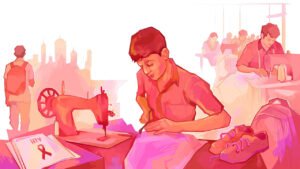
Since the campaign was launched, the Keralam Police has been posting Instagram reels that show people, allegedly trafficking or consuming drugs in Perumbavoor, being caught. An estimated 1.5 lakh migrants live in panchayats around Perumbavoor town in Ernakulam district. While the town’s plywood factories have employed migrants for years—they are the backbone of the industry’s economy—the state’s drug problem is increasingly being pinned on them. This signals a dangerous—and exclusionary—trend, say activists working on issues affecting migrants in the state.
MIGRANTS FRAMED AS A SECURITY THREAT
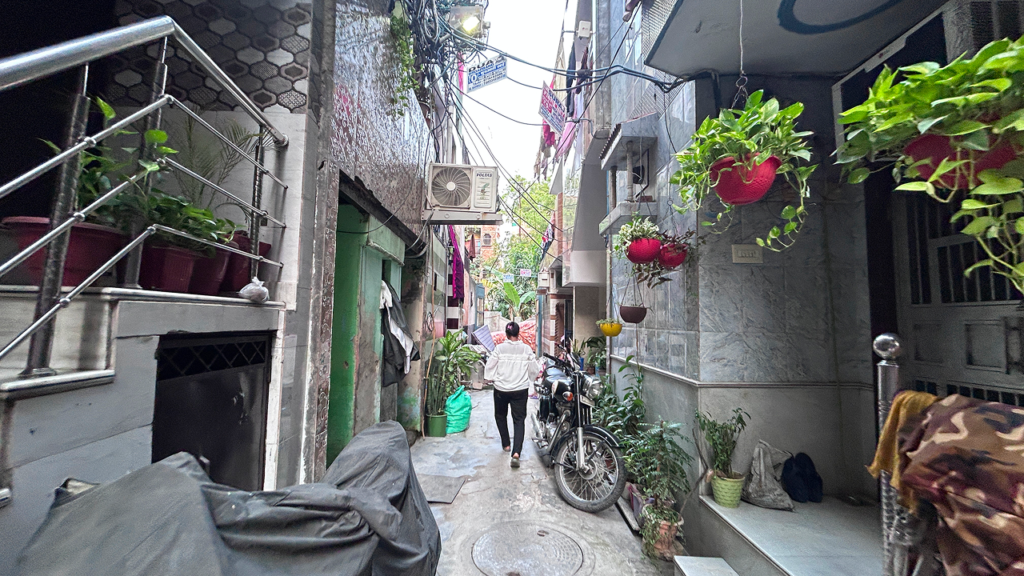
Reels about drug trafficking and use have been shared on both official government channels and those of at least a dozen local Malayalees. For the latter, making sensationalist videos from the migrant cluster of Bhai Colony in Perumbavoor promises a large social media reach, which, more than reporting, is their main attraction.
In the case of the government channels, the reels on Operation Toofan shot in Perumbavoor reinforce the “securitisation of migrants”, said Benoy Peter, Executive Director of the Centre for Migration and Inclusive Development (CMID), a Perumbavoor-based nonprofit. The securitisation of migrants refers to the idea that they pose a security threat to and should be surveilled, detained or excluded.
“Operation Toofan doesn’t introduce the securitisation, but reinforces it, and Bhai Colony is only a small part of the Perumbavoor municipality,” Peter explained. He went to say that while the area has serious issues, such as drug abuse, illicit liqour sale and the prevalance of sex work, they should be used as a shield to securitise migrants on the outskirts of Perumbavoor and in other areas.
On its website, the success of Operation Toofan has been highlighted in numbers: an August 26 press release stated that 10,467 people had been arrested in 9,706 drug-related cases. But the securitisation of Keralam’s migrant population is not new and has been reinforced by earlier governments too.
The christening of migrants as “guest workers” by the previous Left Democratic Front (LDF) government, for instance, is a case in point. The term “guests” hints at the idea that migrants are outsiders and is contrary to the federal nature of the country, Peter added, which allows any citizen to work anywhere. “The LDF even introduced a campaign called Operation Bhai, which reinforced the narrative that migrants are the primary traffickers of drugs,” he said.
“OUTSIDERS” EXCLUDED IN GOD’S OWN COUNTRY
Malayalees often use terms like Bengali, Hindikkaar (a person who speaks Hindi) or bhai to refer to migrants, irrespective of where they are from or what language they speak, Deluyar told The Migration Story. In fact, when he travels to any part of Keralam, he runs into people who say, “That’s viral bhai!”, referring both to his huge following and his migrant identity.
Though Deluyar has incorporated bhai into his digital identity, he finds it condescending when Malayalees use it to refer to him. “We like to be called chetta [brother in Malayalam], not bhai And if someone from Bengal living in Keralam is called Bengali, trust me, he will be so sad,” Deluyar sighed.
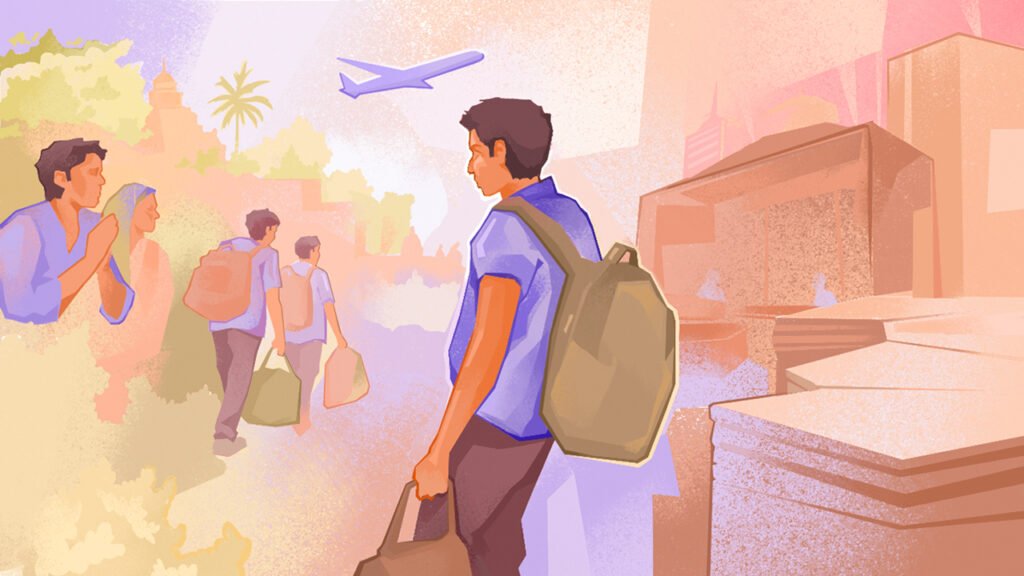
Originally from West Bengal’s Murshidabad district, Deluyar moved to Keralam because of the promise of better wages. The state offers workers the highest daily wages in the country across sectors, whereas Deluyar made only 200 rupees a day back home. So, Deluyar moved here to find work and once he did, his wife and two children followed him.
“Keralam is the real paradise,” he told this reporter in Vettupara village, Malappuram district, where he now lives with his family. “And if I could speak Malayalam as fluently as Malayalees, I would never have attracted this many followers,” he said with a smile.
There are also content creators who came to Keralam from other states as children and now vlog fluently in Malayalam. Bikram Mondal or @mallu__bhaiya is one of them. His family moved to Thrippunithura town, an hour from Perumbavoor, when he was a child and Bikram learnt Malayalam at a local school.
Though Bikram too has made bhaiya a part of his Instagram handle, he told The Migration Story that “the onus of any crime committed by an interstate migrant will always be put on a Bengali.” He went on to say that “the major traffickers of drugs and their biggest consumers belong to other communities, but the blame will be on the Bengalis.”
INTERSTATE WORKERS SURVEILLED AND ASSAULTED
In fact, a Malayalam poster recently circulated on social media appealed to citizens to report suspected “illegal” Bangladeshis (Bangladeshikal in Malayalam), their location and photographs to the National Investigation Agency. This, it said, was in national interest. On the right, it had three clip-art figures without ID cards hovering over a figure with identification, presumably proof of citizenship.
The sentiment that migrants in the state are outsiders is fairly widespread, Peter of CMID pointed out. “Keralam is now buying into the global xenophobic narrative [and using it] against its own migrants. Right-wing organisations like the Vishwa Hindu Parishad are actively engaging with people to increase the scrutiny of migrants,” he said.
There were reportedly five mob lynchings of migrant workers in the state in the past decade. Human rights activists said that a video of the lynching of a Chhattisgarhi Dalit youth in December 2025 in Walayar town, Palakkad district, showed the accused allegedly asking him if he was a Bangladeshi. This, the activists added, was an act of mob violence led by members of the Sangh Parivar. The then chief minister, Pinarayi Vijayan, also said that the accused had “criminal backgrounds and a communal mindset”.
Earlier this year, in Perumbavoor’s Kandanthara locality, vigilante groups reportedly assaulted migrants, forced eateries to shut early, and threatened to banish women and transgender people from the settlement because they said drugs were being sold there and sex work was going on.
THE GOVERNMENT’S POSITION
In light of this violence, it is not surprising that migrant workers like Deluyar and others have come out in support of government campaigns like Operation Toofan. Others, like 28-year-old Gaganandan from Rajasthan, whom this reporter met in Kozhikode on his way back from his home state, echoed Deluyar’s sentiment. “Keralam is a good and safe place to reside, and there is nothing wrong with the actions taken by the government to curb drugs under Operation Toofan,” he said.
According to a PTI press release, on a July 3 visit to Perumbavoor, the state’s home and vigilance minister, Ramesh Chennithala said that “the narcotics network had exploited migrant labourers as cover, and it is this web—not the workers themselves—that Operation Toofan targets.”
The minister went on address migrant workers in Hindi and gave Toofan Warrior badges to some of them, particularly those who said the didn’t consume any drugs. The minister also declared that all the residents of Kandanthara Bhai Colony were Toofan Warriors.
“Migrants have come here [to Keralam] after leaving their homes in order to contribute to the development of this state. We are not saying that migrants use or carry drugs,” he said. “I request their support to eliminate the problem of drugs from our state. They should not fall prey to those who are trying to exploit them.”
WELFARE SCHEMES HARVEST WORKERS’ DATA
But the securitisation of migrants in the state functions in insidious ways—and Operation Toofan is only one of them. It also operates through government’s welfare schemes for migrant workers, which harvest their data in a covert attempt to surveil them. Successive state governments have tried to do this in different ways.
One such welfare scheme is Aawaz, launched in 2017, which offers migrants free medical treatment up to 15,000 rupees a year and a health insurance cover of two lakh rupees. It asks that migrants submit a government ID and biometric data at a registration centre to avail the scheme.
Another is the Athidhi Kerala app, which invites migrant workers, their employers and contractors to register on it. It was set up in 2023 after two sexual crimes, allegedly committed by migrants against children from the same states, took place in Ernakulam district’s Aluva town. To register on the Athidhi Kerala app, migrants must provide their name, address, mobile number, date of birth, gender, father’s name, educational background, skills and work history, and information about their employers or contractors.
V. Sivankutty, the labour minister in 2023, was quoted as saying that Athidhi Kerala would register all “guest workers” in the state. In fact, the police in Ernakulam district kickstarted this process, sought police clearance certificates of migrant workers from their home states, and collected data from scores of migrants.
WAGE CEILINGS AND REVERSE REMITTANCES
Fast-forwarding to 2026: During the recent elections in Assam and West Bengal, many migrants working in Keralam travelled to their home states to vote. Leveraging the high demand for labour, the migrants who stayed behind started asking for higher wages, causing panic among local employers in construction, agriculture and hospitality.
This reporter found an image of a public notice online, issued by a contractors’ association in Pallarimangalam village, Ernakulam district, which asked people not to pay “guest workers” more than a certain wage. It said that the maximum daily wage of masons should be 1,150 rupees and that of helpers, 900 rupees. Additionally, it stated that women workers should not be paid more than 700 rupees a day.
Similar notices were posted on social media by contractors’ associations in Muvattupuzha and Perinthalmanna towns in central and north-central Keralam. Some contractors’ associations also facilitated meetings with migrants to reach a consensus on wages. These posters have garnered mixed reactions from the public, which include questions about the permissibility of such wage ceiling moves.
Alongside this, at the state level, questions have been raised about the “reverse remittance” of interstate workers, who send their income back home. At the close of the legislative assembly’s last session in early July, V. D. Satheesan, the state’s chief and finance minister, said a comprehensive study would be undertaken on the impact of these remittances on the state’s financial health. He added that apps like Google Pay have contributed to a liquidity challenge, with less money in circulation in the state.
This is not the first time that Satheesan has brought up the reverse remittance debate. In 2025, as a member of the Opposition, he said that Keralam was witnessing both reverse migration and reverse remittances, which threatened household incomes and the economy as a whole.
Responding to this, Rafeek Ravuther, Executive Director of the Aluva-based Centre for Indian Migrant Studies (CIMS), said, “The greatest paradox of it all is the fact that Keralam is one of the largest remittance economies in the country. This [comment] is purely xenophobic in nature.” He added that the economic development of the state was never based solely on remittances from Malayalees working in the Gulf countries, but on factors such as the Land Reformation Act (1963), which abolished landlordism and gave land rights to tenant farmers, among others.
“Migration is not only about money; it is also the exchange of language, food, culture and knowledge. Migrants spend a lot of money in the local economy wherever they live,” Ravuther told The Migration Story. “What if all Gulf countries decided to expel Keralites from their states?”
DESPITE DISCRIMINATION, MIGRANTS FAVOUR KERALAM
Keralam remains a favourite destination for migrants from other states because it offers labourers the highest daily wages in the country, has high demand for labour, and has introduced healthcare, housing and education policies to ensure the wellbeing of migrant workers and their families. Many interstate workers settle down here and send their kids to local government schools.
Industry in Kerala is heavily reliant on migrant labourers, and they have become an indispensable part of it. In his speech in the last legislative assembly session, the CM mentioned this and said that 40 to 50 lakh interstate workers are employed in the state.
But the negative framing of the migrants through their securitisation has sown seeds of discrimination towards them. And despite Deluyar’s pro-Operation Toofan video, he is critical of the negative depictions of migrants online. “It is true that migrants consume drugs [in Perumbavoor and other places]. But there are many Malayalees who also make money from it,” he said matter-of-factly.
A user called sanimirza456, also an Assamese migrant worker, expressed hurt over being blamed for the state’s drug problem. In response to a video of a sex worker being surveilled in Perumbavoor, the user said: “We came here searching for sustenance and work here proudly. It hurts us when the entire Assamese community is prosecuted for the misbehaviour of some migrants. May the wrongdoers be punished but don’t hate the innocents.”
That said, videos shot in Perumbavoor, particularly those about drug use or sex work, often elicit openly xenophobic comments. Some Instagram users demand greater surveillance of migrants, others ask for them to be ousted from the state. “Deport these migrant workers if they do not have a registered Keralam sponsor and a medical card,” said a comment in response to a video of people using drugs publicly in Perumbavoor.
“The natives here should think of a way to oust these people; they don’t care about the laws of Keralam,” said another comment in response to a video on a local news news channel (@nammudeswanthamperumbavoor) that showed drugs being sold openly in a market.
“Drugs are not exclusive to Perumbavoor. What is happening here is the result of a lack of awareness because of the social conditions of migrants,” the admin of @nammudeswanthamperumbavoor told The Migration Story.
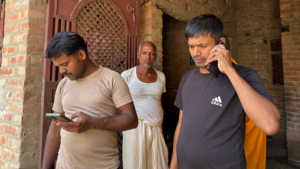
Some migrants we spoke to said that while they have seen interstate workers being cheated or assaulted in Perumbavoor, their Malayalee neighbours have been kind to them. “Migrants carry a lot of cash with them and sometimes, Malayalees take it from them,” said Ameer, originally from Assam, who has lived here for a decade and runs a textiles shop near the bus stand.
But he spoke positively about his landlady, who, he said, trusts him and his family and rents out her shop to them. “Our landlady is very cooperative.” Still, he ended with caveat. “Nothing bad will happen in Perumbavoor [drug use, illicit liqour sale or sex work] without the consent of at least some locals.”
Edit and additional inputs by Subuhi Jiwani
Mohammed Ramees is an independent journalist and media scholar, currently doing his second master’s at the Doha Institute for Graduate Studies, Qatar.